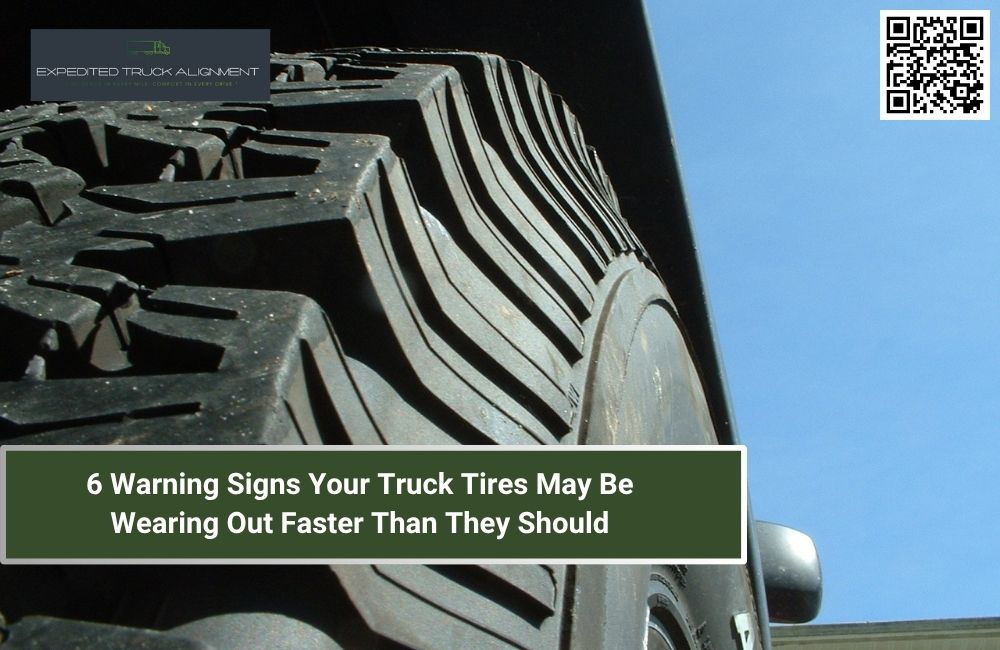
6 Warning Signs Your Truck Tires May Be Wearing Out Faster Than They Should
Your tires work hard every single day. They carry the weight of your truck, absorb the stress of rough roads, respond to every turn, and help keep your vehicle steady through traffic, weather, and long hours on the road. That is why it can be frustrating when your truck tires seem to wear out much faster than expected.
For many truck owners, early tire wear does not start with a dramatic blowout or obvious damage. It starts with smaller warning signs that are easy to overlook at first. A little uneven wear, a slight pull in the steering, or a rougher ride than usual may not seem urgent in the moment, but those signs often point to bigger issues like poor truck alignment, suspension wear, or the need for professional truck wheel alignment.
The good news is that your truck usually gives you clues before tire wear becomes an expensive problem. If you know what to watch for, you can protect tire life, improve handling, and reduce the chances of early truck tire replacement.
Why Fast Tire Wear Should Get Your Attention
Tires are one of the biggest ongoing maintenance costs for many truck owners. When they wear out too soon, it is not just frustrating. It can also affect safety, fuel efficiency, ride quality, and your overall operating budget.
Tire wear usually has a cause
Normal wear happens over time, but rapid or uneven wear often means something else is going on. In many cases, the real issue is not the tire itself. It may be the way the truck is tracking, carrying weight, or responding to the road.
Early attention can save money
Catching the warning signs early can help you avoid replacing tires before necessary. It can also help you spot problems that may need truck alignment, suspension service, or a closer inspection before the wear spreads even further.
Better tire life means better performance
Healthy truck tires help the truck steer more confidently, stop more effectively, and feel more stable on the road. Protecting tire life is about more than saving money. It is also about improving how your truck performs every day.
Warning Sign 1: One Side of the Tread Is Wearing Faster Than the Other
One of the clearest signs of a problem is edge wear. If the inside or outside edge of the tread is disappearing faster than the rest of the tire, the truck is trying to tell you something important.
What this usually means
This kind of wear often points to poor truck alignment. When the wheel angles are off, the tire no longer meets the road evenly. Instead of rolling flat, it leans too much to one side and wears down that edge faster.
Why it matters
You may still have plenty of tread left across the rest of the tire, but once one edge is too worn, the entire tire may need attention. That can lead to earlier-than-expected truck tire replacement even though much of the tire still looks usable.
Warning Sign 2: Your Truck Pulls Left or Right While Driving
If your truck does not want to stay straight without constant steering correction, that is another major warning sign that tire wear may be happening faster than it should.
Why pulling affects tires
When a truck pulls to one side, the tires are not rolling evenly. That adds extra drag, extra friction, and extra stress to the tread. Over time, your semi truck tires wear down in ways they should not.
Why drivers notice this early
Many truck owners first realize something is wrong when the truck starts feeling tiring to drive. That is often when they begin searching for truck alignment near me because the steering no longer feels right.
Warning Sign 3: The Steering Wheel Is Off-Center
A crooked steering wheel may seem like a small issue, but it is often a clue that the truck is not aligned the way it should be.
What it tells you
If the road is straight but the steering wheel is tilted, the truck may need truck wheel alignment. This usually means the wheels are no longer positioned correctly in relation to each other.
How it affects tire wear
Even a slight misalignment can slowly wear the tread unevenly. If the problem is ignored long enough, it may shorten the life of your truck tires and make the vehicle feel less stable overall.
Warning Sign 4: You Notice Feathering Across the Tread
Feathering is a wear pattern that some drivers miss until it becomes more noticeable. It can make the tread feel rough in one direction and smooth in the other.
What causes feathering
This often happens when the tire is being dragged slightly sideways as it rolls. That kind of wear is commonly linked to truck alignment issues and can also affect how the truck sounds and feels on the road.
Why feathering should not be ignored
Feathering can make the ride noisier, reduce tire life, and create a rougher driving experience. It is usually a sign that your truck tires are not meeting the road correctly and may need alignment attention soon.
Warning Sign 5: Your Truck Feels Rougher or Less Stable on the Road
Sometimes tire wear shows up in the way the truck feels before it becomes obvious in the tread.
What drivers often notice
The truck may feel less planted, more bouncy, or just harder to control than before. In some cases, it may feel fine when empty but noticeably worse when loaded.
What could be behind it
This can point to a mix of issues, including poor truck alignment, worn suspension parts, or the need for heavy truck alignment if the vehicle is carrying heavier loads or working harder routes.
Why it matters for bigger vehicles
Heavier trucks place more pressure on the tires, suspension, and steering system. That is one reason many operators start searching for heavy truck alignment near me or heavy duty alignment near me when handling begins to change.
Warning Sign 6: You Are Replacing Tires More Often Than Expected
If you feel like you are buying tires too often, that is usually a sign the problem is bigger than the tires themselves.
Why repeated replacement happens
Some truck owners replace worn tires but never correct the underlying cause of the wear. If the truck still has an alignment or suspension issue, the new tires may start wearing the same way all over again.
What smart owners do instead
They look beyond the rubber. If tire wear keeps returning, it often makes sense to inspect truck alignment, steering feel, and related components before another round of truck tire replacement becomes necessary.
Why Tire Wear Happens Faster on Work Trucks
Work trucks face conditions that can speed up wear quickly. Daily mileage, local stops, rough pavement, loaded routes, and changing road surfaces all create more pressure on the tires.
Heavier use means faster consequences
A truck used for business rarely gets a break. That means small problems in truck alignment or suspension have more opportunities to turn into visible tire wear.
Loaded driving changes everything
A truck that carries tools, cargo, or equipment puts more force through the tread. If the alignment is even slightly off, your truck tires may wear much faster under those heavier working conditions.
Why Bigger Vehicles Need More Specialized Care
Not all alignment issues are the same. Larger vehicles need more precision because size and weight can magnify even a small problem.
Commercial trucks need accurate service
A larger setup often benefits from heavy truck alignment because the extra weight and axle configuration make proper tracking more critical.
Larger travel vehicles matter too
This is not limited to work trucks. Bigger travel setups can also suffer from uneven wear and drifting. In those cases, RV alignment can help improve control and protect tire life.
What to Check Before Tire Wear Gets Worse
If you suspect your tires are wearing too fast, paying attention to a few basic details can help you decide when it is time for service.
Look closely at the tread
Compare inner edges, outer edges, and overall wear patterns on all your truck tires. Uneven wear usually reveals itself clearly once you start looking for it.
Notice how the truck feels
If the truck is pulling, drifting, vibrating, or feeling less stable than normal, those signs matter. They often show up before the tire damage becomes severe.
Think about recent driving conditions
If the truck has been working harder, carrying more weight, or taking rougher routes, alignment and suspension issues may show up more quickly than usual.
Why Early Service Is Usually the Smartest Move
The longer a tire wears unevenly, the harder it is to save it. That is why early inspection and correction make such a difference.
Alignment problems get more expensive with time
A truck that needs simple truck wheel alignment today may need multiple tires tomorrow if the wear keeps spreading.
Better maintenance protects your investment
Your truck tires are too expensive to wear out early because of a fixable problem. Addressing truck alignment early helps protect the tread you already paid for.
Conclusion
Fast tire wear is rarely random. Most of the time, your truck is giving you clear warning signs before the problem becomes severe. Uneven edge wear, pulling, an off-center wheel, feathering, rough handling, and repeated semi truck tires are all signs that your truck tires may be wearing out faster than they should.
The smartest response is to look beyond the tire itself. In many cases, the real cause is poor truck alignment, the need for truck wheel alignment, or a bigger issue that deserves attention before the damage gets worse. Whether your vehicle needs standard alignment care, heavy truck alignment, or even RV alignment, acting early can save money and improve how your truck feels on the road.
Contact Expedited Truck Alignment & Tires
Expedited Truck Alignment & Tires
Address: 11302 Steele St S, Lakewood, WA 98499
Phone: +1 (619) 551-8460
If your truck is showing signs of uneven tire wear, poor handling, or early truck tire replacement, Expedited Truck Alignment & Tires can help with experienced service for truck alignment, truck wheel alignment, heavy truck alignment, and tire-focused maintenance designed to keep your vehicle running strong.
