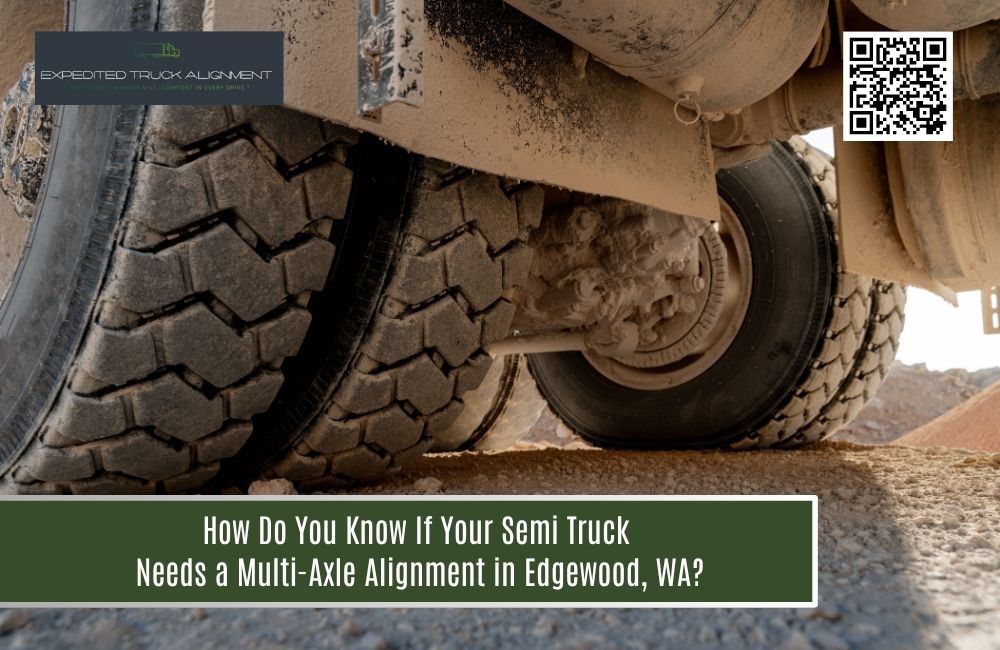
How Do You Know If Your Semi Truck Needs a Multi-Axle Alignment in Edgewood, WA?
A semi truck can travel thousands of miles while its axles gradually move out of proper alignment. The driver may not notice an immediate handling problem, but tire wear, steering behavior, and operating costs can change over time. For commercial vehicle owners in Lakewood, WA, understanding when a multi-axle truck alignment Edgewood, WA is necessary can help prevent premature tire replacement and unexpected maintenance expenses.
Multi-axle alignment examines how several axles are positioned relative to the vehicle's centerline. Unlike basic front-wheel adjustments, it considers the relationship between steering, drive, and trailer axles. This approach is particularly valuable for semi trucks, buses, RVs, and other large vehicles with complex suspension systems.
What Makes Multi-Axle Alignment Different?
A standard truck wheel alignment typically focuses on wheel angles and steering geometry. Multi-axle alignment takes a broader approach by evaluating how different axles work together.
On a tractor-trailer combination, the steer axle controls direction while the drive and trailer axles influence tracking. If one axle points slightly away from the intended travel path, the vehicle may experience tire scrub or require additional steering corrections.
A professional semi truck wheel alignment inspection uses specialized measuring equipment to identify these differences. Technicians compare axle positions and determine whether adjustments or mechanical repairs are necessary.
The objective is to help the vehicle travel consistently without forcing individual tires to compensate for incorrect axle positioning.
Why Do Semi Trucks Develop Alignment Problems?
Commercial trucks operate under demanding conditions that gradually affect suspension and steering components.
Heavy cargo, repeated braking, uneven pavement, tight turns, and road impacts place considerable stress on axle mounting points. Over time, bushings, springs, steering joints, and suspension hardware can wear or shift.
A truck operating around Lakewood and Tacoma may regularly travel Interstate 5, Interstate 705, industrial access roads, and busy distribution areas.
These routes expose vehicles to changing road surfaces and frequent loading conditions.
Although normal operation does not automatically cause misalignment, worn components or significant impacts can alter axle geometry enough to justify inspection.
When Steering Feels Different Than Normal
Changes in steering behavior are among the most recognizable reasons to investigate alignment.
A driver may notice that the steering wheel sits slightly off center or that maintaining a straight path requires more effort than usual.
However, steering changes do not always originate at the front axle.
A drive axle positioned incorrectly can influence the vehicle's direction, creating a condition that feels like a steering problem.
A comprehensive semi truck alignment service can help determine whether the issue involves front-end geometry, drive-axle tracking, suspension movement, or other mechanical conditions.
Why Uneven Tire Wear Deserves Attention
Tires provide valuable evidence about how a commercial vehicle travels.
When an axle is misaligned, its tires may experience sideways movement against the pavement. This can create irregular tread patterns and accelerate wear.
Drivers may notice differences between the inner and outer shoulders or find that certain axle positions require replacement sooner than expected.
A qualified truck tire shop can examine tread condition and determine whether further alignment measurements are appropriate.
Because semi truck tires represent a substantial maintenance investment, identifying the underlying cause of unusual wear can help avoid repeated replacement expenses.
Can Multi-Axle Misalignment Affect Vehicle Stability?
Yes. Incorrect axle relationships can influence directional stability, particularly when a truck carries heavy loads or operates at highway speeds.
The driver may compensate for the vehicle's tracking behavior without realizing that the rear axles are contributing to the problem.
This does not mean every handling concern is caused by misalignment. Tire pressure differences, steering wear, suspension damage, and braking problems can produce similar symptoms.
Professional commercial truck alignment diagnostics help distinguish geometry concerns from other mechanical issues.
Sudden or severe steering instability requires immediate attention rather than waiting for scheduled maintenance.
Why Trailer Tracking Matters
A tractor and trailer must follow compatible paths for efficient operation.
When trailer axles are incorrectly positioned, the trailer may travel slightly sideways instead of following directly behind the tractor.
This condition can increase tire scrub and contribute to irregular tread wear.
Proper tractor trailer alignment evaluates the relationship between the trailer axles and the vehicle's intended direction of travel.
Drivers who notice unusual trailer positioning or recurring tire wear should consider whether the trailer requires inspection independently of the tractor.
What Happens During a Multi-Axle Alignment Inspection?
A reliable inspection begins with the vehicle's mechanical condition.
Technicians examine steering and suspension components, check tire inflation, and look for damage that could affect measurement accuracy.
Once the vehicle is mechanically stable, specialized equipment measures axle relationships and relevant wheel angles.
During commercial truck wheel alignment, technicians may evaluate toe, thrust angle, axle tracking, and other manufacturer-specified geometry measurements.
Adjustments depend on vehicle design and available adjustment points.
Some problems require replacing worn components before accurate alignment can be completed.
This diagnostic process helps prevent unnecessary adjustments and supports longer-lasting results.
Does Every Heavy Vehicle Need the Same Alignment Procedure?
No. Different commercial vehicles require different inspection methods.
An 18 wheeler alignment may involve steer, tandem drive, and trailer axle measurements. A commercial bus may have different suspension geometry and steering requirements.
Motorhomes and large RVs can also develop alignment concerns, particularly when suspension condition or loading affects wheel position.
Professional heavy duty wheel alignment should account for vehicle configuration, manufacturer specifications, operating weight, and suspension design.
Using an appropriate procedure is more important than applying identical adjustments to every large vehicle.
How Often Should Multi-Axle Alignment Be Checked?
There is no universal mileage interval that applies to every commercial truck.
Inspection frequency depends on manufacturer recommendations, vehicle usage, road conditions, maintenance history, and visible symptoms.
A truck that regularly operates on rough construction access roads may require closer monitoring than one travelling primarily on maintained highways.
Alignment checks are also worth considering after significant road impacts, steering repairs, suspension component replacement, or recurring tire-wear problems.
For fleets, coordinating fleet truck alignment inspections with preventive maintenance can make scheduling more manageable.
Can Alignment Help Extend Tire Life?
Correct alignment can reduce unnecessary tire scrub and support more consistent tread contact.
However, alignment alone cannot guarantee longer tire life.
Inflation pressure, loading, driving habits, tire construction, suspension condition, and maintenance practices also influence wear.
When commercial truck tires develop irregular patterns, technicians should examine these factors together rather than assuming alignment is the only possible cause.
Correcting an underlying geometry problem before installing replacement tires can help protect the new investment.
Why Lakewood's Commercial Routes Matter
Lakewood is positioned near important transportation corridors connecting Tacoma, Olympia, Joint Base Lewis-McChord, and surrounding South Puget Sound communities.
Commercial vehicles operating in this region may encounter interstate driving, local deliveries, industrial facilities, and frequent loading activities.
These conditions create different demands for trucks, trailers, buses, and recreational vehicles.
Local operators benefit from maintenance decisions that reflect their actual driving conditions rather than relying exclusively on generic service intervals.
A truck making frequent deliveries may develop different wear patterns from one completing long regional highway trips.
What Should Drivers Check Between Inspections?
Drivers can identify potential concerns without performing mechanical adjustments themselves.
During routine vehicle checks, pay attention to tire condition, unusual steering behavior, visible suspension damage, and changes in how the vehicle tracks.
Comparing truck tires across axle positions may reveal developing differences before severe wear occurs.
Drivers should also report unusual vibrations, changes following road impacts, or steering behavior that varies between loaded and unloaded operation.
These observations provide technicians with useful diagnostic information and can help determine whether alignment testing is necessary.
Frequently Asked Questions
How can I tell if my semi truck needs alignment?
Common indicators include recurring uneven tire wear, an off-center steering wheel, repeated steering corrections, and abnormal axle tracking. Professional measurements are needed to confirm misalignment.
Can a truck drive straight with incorrect axle alignment?
Yes. Some axle geometry problems create tire scrub without producing an obvious steering complaint.
Is semi truck alignment different from passenger vehicle alignment?
Yes. Commercial vehicles may have multiple drive and trailer axles, heavier suspension components, and different manufacturer specifications.
Can new tires correct alignment problems?
No. New tires replace worn tread but cannot correct incorrect axle geometry or damaged suspension components.
Should alignment be checked after suspension repairs?
An inspection may be appropriate when repairs affect axle location, steering geometry, or ride height.
Can buses and RVs benefit from multi-axle alignment?
Yes. Large buses and RVs can experience tracking and tire-wear concerns that require vehicle-specific alignment measurements.
Protect Your Vehicle With Timely Alignment Inspections
Multi-axle alignment is an important part of commercial vehicle maintenance because it addresses how the entire vehicle tracks, not simply where the steering wheel points.
Recognizing unusual tire wear, steering changes, and axle-tracking concerns can help drivers make informed maintenance decisions.
For operators seeking professional semi truck alignment in Lakewood, Expedited Truck Alignment & Tires provides truck and trailer alignment, tire diagnostics, and steering and suspension services throughout Tacoma and South Puget Sound.
Expedited Truck Alignment & Tires
Address: 11302 Steele St S, Lakewood, WA 98499
Phone: +1 (564) 200-3637
