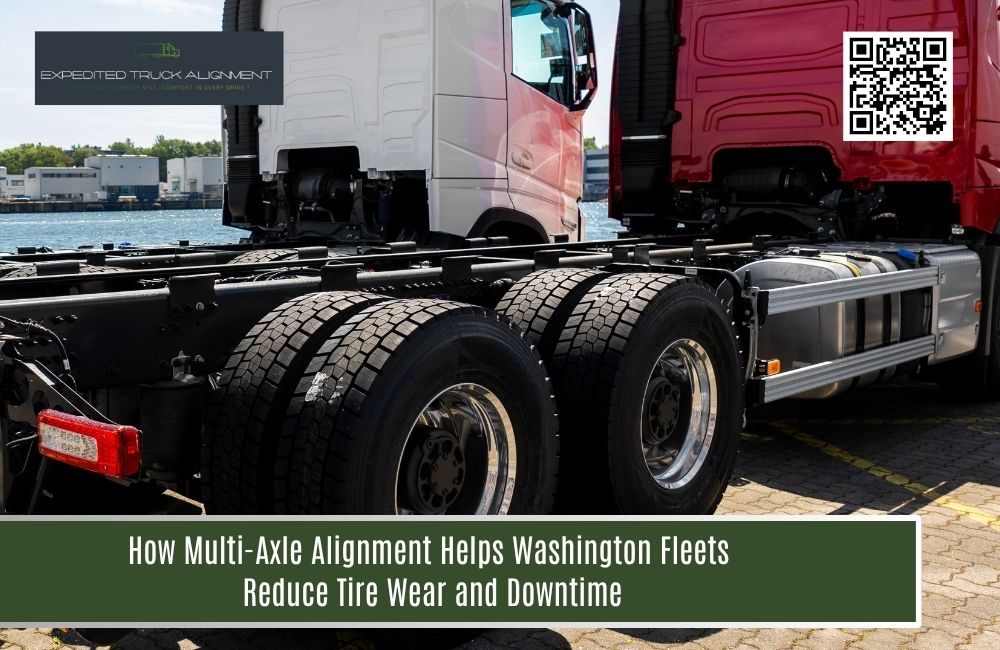
How Multi-Axle Alignment Helps Washington Fleets Reduce Tire Wear and Downtime
For commercial fleets operating across Washington, small alignment problems can quickly become expensive. Proper truck alignment helps keep every axle tracking correctly, reduces irregular tread wear, improves handling, and lowers the risk of avoidable downtime. For fleet managers in Lakewood, Tacoma, and nearby communities, multi-axle alignment is not just a maintenance task it is a practical cost-control strategy.
Expedited Truck Alignment & Tires provides specialized alignment, suspension, steering, and tire services for commercial vehicles throughout the South Puget Sound region. Founded by Luis Lopez, the company brings more than a decade of hands-on experience in tire wear diagnostics and heavy-duty vehicle systems.
What Is Multi-Axle Alignment?
Multi-axle alignment measures how each truck or trailer axle is positioned in relation to the vehicle’s centerline and the other axles. The goal is to make sure the entire vehicle tracks straight rather than forcing one axle to compensate for another.
This service is especially important for:
Three-axle trucks
Tractor-trailer combinations
Dry vans
Reefers
Flatbeds
Dump trucks
Car haulers
Box trucks
Multi-axle commercial trailers
Why Front-End Alignment Alone May Not Be Enough
A truck may appear properly aligned at the steer axle while a rear or trailer axle remains out of position. When that happens, the vehicle can travel slightly sideways, creating added drag and uneven pressure across the tires.
A full multi-axle inspection evaluates the entire vehicle instead of focusing only on the front wheels.
How Misalignment Increases Fleet Tire Costs
Tires are one of the largest recurring expenses for commercial fleets. Misalignment can shorten tread life by concentrating road pressure on specific areas of the tire.
Common wear patterns linked to axle or steering issues include:
Inner-edge wear
Outer shoulder wear
Feathering
Cupping
Diagonal wear
Uneven wear across paired tires
A knowledgeable truck tire shop can use these patterns to identify whether the problem is related to alignment, balancing, inflation, suspension wear, or another mechanical issue.
Protecting New Tire Investments
Installing new semi truck tires without correcting the cause of previous wear can lead to the same damage returning. Before replacing a worn set, fleets should consider a full alignment and suspension inspection.
This approach helps protect the replacement investment and supports more consistent tread life across the vehicle.
Reducing Downtime Through Preventive Alignment
Unexpected tire damage and steering problems can take a truck out of service at the worst possible time. Preventive multi-axle alignment allows fleet managers to identify developing concerns during scheduled maintenance rather than after a roadside failure.
Routine inspections can reveal:
Axle tracking problems
Incorrect toe settings
Off-center steering
Worn bushings or kingpins
Suspension movement
Inflation inconsistencies
Tire balance concerns
Correcting these issues early can reduce emergency repairs, missed deliveries, towing expenses, and schedule disruptions.
Maintenance Planning Becomes More Predictable
Fleet operations depend on consistency. When alignment and tire inspections are built into preventive maintenance schedules, managers can plan repairs around workload instead of reacting to sudden failures.
This makes budgeting easier and helps keep more vehicles available for daily service.
Better Fuel Efficiency and Vehicle Stability
A misaligned truck creates unnecessary rolling resistance. The vehicle may need more energy to move straight because one or more axles are dragging or pushing against the intended direction of travel.
Correct alignment may help support:
Smoother tracking
Reduced steering correction
Better stability under load
More predictable handling
Lower rolling resistance
Improved driver comfort
Although alignment is only one factor affecting fuel use, reducing unnecessary drag can contribute to more efficient fleet performance over time.
The Connection Between Suspension and Alignment
Alignment settings cannot remain accurate when suspension or steering components are worn. Loose or damaged parts allow unwanted axle and wheel movement, which can quickly undo an adjustment.
Expedited Truck Alignment & Tires inspects and services components such as:
Kingpins
Bushings
Steering joints
Air bags
Air suspension systems
Shocks
Springs
Hangers
Steering components
Why Repairs May Come Before Alignment
If a technician identifies excessive movement in a kingpin, bushing, or steering joint, that component may need to be repaired before final alignment measurements are completed.
This prevents fleets from paying for an adjustment that the vehicle cannot maintain.
How Often Should Fleet Trucks Be Checked?
There is no single schedule that fits every fleet. Inspection frequency depends on mileage, vehicle type, route conditions, load demands, and previous wear history.
A multi-axle alignment check may be appropriate when:
New tires are installed
A vehicle begins pulling or drifting
Steering feels unstable
Uneven wear appears
Suspension work is completed
A truck hits a major pothole or curb
A trailer stops tracking correctly
Fuel consumption changes without explanation
High-mileage vehicles and trucks operating on rough routes may require more frequent evaluations.
Tire Wear Analysis Helps Find the Real Problem
Tread wear tells a story about how a vehicle is performing. A detailed inspection of truck tires can reveal whether the cause is mechanical, operational, or maintenance-related.
For example:
Center wear may suggest excessive inflation
Shoulder wear may indicate low pressure
Feathering may point to toe misalignment
Cupping may involve balance or suspension problems
Repeated wear on one axle may indicate tracking issues
By combining tread analysis with alignment measurements, technicians can recommend repairs based on evidence rather than assumptions.
Fleet Tire Support in Lakewood and Tacoma
Expedited Truck Alignment & Tires supports independent operators and local fleets throughout Lakewood, Tacoma, and surrounding Washington communities.
Available services include:
Multi-axle truck and trailer alignment
Alignment diagnostics
Tire wear analysis
Commercial tire sales
Tire installation and replacement
Rotation and balancing
Inflation correction
Tire repair
Suspension and steering service
On-site fleet tire support
The company is also an authorized HIXIH Tire Distributor in Washington.
Service for Commercial Fleets Across South Puget Sound
The Lakewood location provides convenient access for fleets operating in Tacoma, Puyallup, Fife, Spanaway, Federal Way, Auburn, Kent, Olympia, Lacey, Gig Harbor, and nearby areas.
On-site fleet services may be available depending on location, scheduling, and service needs.
Why Fleets Choose Expedited Truck Alignment & Tires
Luis Lopez founded the company after building his technical foundation at Angel's HD Suspension and Alignment under the guidance of his father, Angel Lopez.
That background created a service approach centered on:
Clear explanations
Accurate measurements
Honest recommendations
Long-term maintenance results
Reduced tire waste
Practical fleet support
The goal is not to mask a symptom. It is to identify why the problem developed and provide a solution that makes a measurable difference over future miles.
Frequently Asked Questions
Can multi-axle alignment extend tire life?
Yes. When all axles track correctly, pressure is distributed more evenly across the tread. This can reduce irregular wear and help tires remain in service longer.
Should commercial tires be aligned after installation?
An alignment check is recommended when new commercial truck tires are installed, especially if the previous set showed uneven wear.
Can trailer misalignment affect the tractor?
Yes. A trailer that does not track correctly can increase drag, affect handling, and contribute to uneven wear across both the tractor and trailer.
Does alignment reduce fleet downtime?
Preventive alignment can help identify tire, steering, and suspension issues before they cause breakdowns or force a truck out of service unexpectedly.
Does Expedited Truck Alignment & Tires offer fleet service?
Yes. The company provides alignment, tire, suspension, steering, and on-site fleet support for commercial customers in Lakewood, Tacoma, and surrounding Washington areas.
Schedule a Fleet Alignment Inspection
Uneven tire wear and recurring steering problems should not become routine fleet expenses. A professional multi-axle inspection can help identify the source, protect tire investments, and keep vehicles available for scheduled work.
Contact Expedited Truck Alignment & Tires to schedule specialized fleet alignment and tire service in the Lakewood and Tacoma area.
Expedited Truck Alignment & Tires
Address: 11302 Steele St S, Lakewood, WA 98499
Phone: +1 (564) 200-3637
