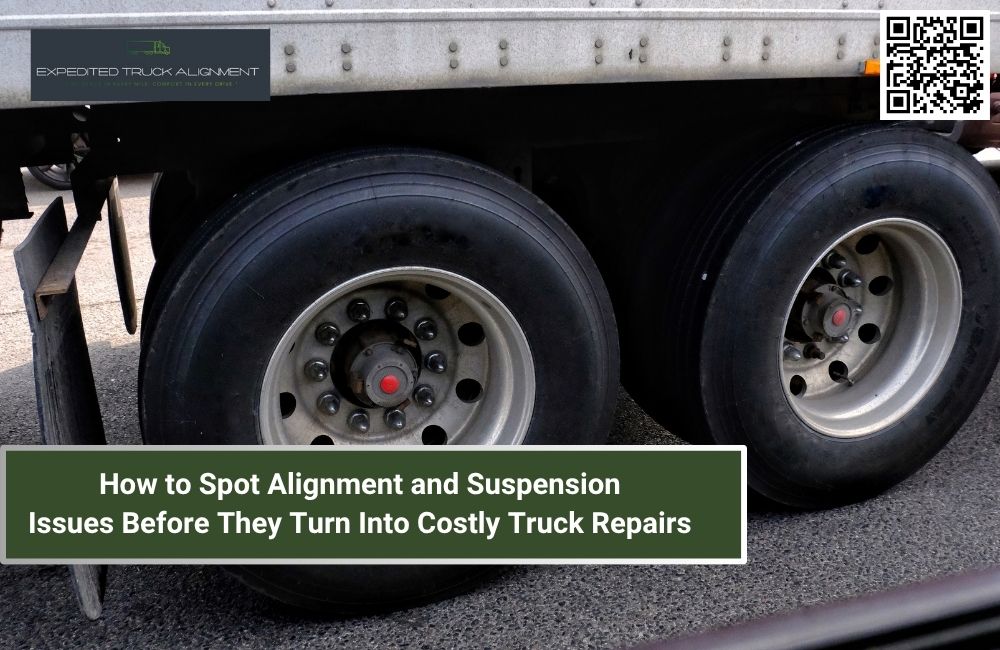
How to Spot Alignment and Suspension Issues Before They Turn Into Costly Truck Repairs
If you use your truck for daily work, you already know how quickly a small issue can turn into lost time, higher costs, and unexpected downtime. The trouble is that many alignment and suspension problems do not start with a major breakdown. They begin with quiet warning signs that are easy to ignore at first. Maybe the steering feels slightly off. Maybe the ride feels rougher than usual. Maybe your truck tires are wearing unevenly, but the truck is still getting the job done.
That is exactly why early attention matters. Spotting alignment and suspension problems before they get worse can help protect your tires, improve handling, reduce stress on other parts, and lower the chances of expensive repairs later. In many cases, catching the problem early can mean the difference between a simple truck wheel alignment service and premature truck tire replacement combined with bigger steering or suspension work.
For truck owners in Lakewood and the surrounding area, learning how to recognize the early signs is one of the smartest ways to protect both performance and budget. Here is how to tell when your truck may be developing alignment or suspension trouble and what those warning signs often mean.
Why Early Detection Matters So Much
Many truck owners wait until the issue becomes obvious. By then, the cost is usually higher than it needed to be. Alignment and suspension problems often build gradually, and the longer they go uncorrected, the more parts they can affect.
Small changes often point to bigger wear underneath
A truck rarely goes from perfect to major failure overnight. Usually, there is a stage where the truck feels slightly different, but still drivable. That in-between stage is when smart owners catch problems before they become expensive.
Tire wear is often the first clue
Your truck tires can reveal alignment or suspension trouble long before a major repair is needed. If the tread is wearing in unusual ways, the truck is often telling you that something underneath is no longer working the way it should.
Preventive service usually costs less than reactive repair
A timely truck alignment check or suspension inspection can help avoid the larger expense of repeated truck tire replacement, damaged steering components, or more severe ride and handling problems.
The Difference Between Alignment Issues and Suspension Issues
These two problems are closely connected, which is why they are often discussed together. Still, they are not exactly the same thing.
What alignment affects
Truck alignment refers to how the wheels are positioned and how they track relative to the road and each other. When alignment is off, the truck may pull, drift, or wear tires unevenly.
What suspension affects
The suspension system supports the truck’s weight, absorbs road impacts, and helps keep the tires in stable contact with the road. If suspension parts wear out, the truck may feel rough, unstable, or uneven, and that can also affect alignment.
Why the two problems often overlap
A worn suspension part can cause alignment to shift or prevent it from holding properly. That is why a truck may need both truck wheel alignment and suspension service to truly solve the issue.
Warning Sign 1: Your Truck Pulls to One Side
A truck that drifts left or right on a straight road is one of the clearest early signs that something needs attention.
What it usually means
This often points to poor truck alignment, especially if the pull is consistent. The wheels may no longer be tracking correctly, which forces the truck to move slightly off line.
Why it can become expensive
That constant pulling does not just affect comfort. It also creates extra stress on your truck tires, which can wear them down faster than expected and increase the need for early truck tire replacement.
Warning Sign 2: The Steering Wheel Is No Longer Centered
If your steering wheel sits crooked while you are driving straight, do not ignore it.
Why this matters
A crooked steering wheel usually means the wheels are not positioned correctly. That is a common sign the truck may need truck wheel alignment.
What can happen if you wait
Even a mild alignment issue can slowly wear tread unevenly and make the truck feel less stable over time. Many drivers first notice this and start searching for truck alignment near me because the vehicle no longer feels quite right.
Warning Sign 3: Uneven Tire Wear Is Starting to Show
Uneven wear is one of the most important warnings your truck can give you.
What to look for
Check whether one edge of the tread is wearing faster than the other, whether one tire looks older than the others, or whether there are strange patterns across the surface.
What it often points to
Uneven wear can be caused by poor truck alignment, worn suspension parts, or both. If left alone, it often leads to earlier truck tire replacement than you planned for.
Why it matters for long-term cost
Your truck tires are too expensive to sacrifice to a problem that could have been caught sooner. Tread wear is one of the best reasons to schedule service early.
Warning Sign 4: The Ride Feels Rougher or Less Stable
Sometimes the warning sign is not visual. It is the way the truck feels on the road.
What drivers often notice
The truck may bounce more than usual, feel unsettled over bumps, or seem less planted in turns and during braking.
What this may indicate
This type of change often points more toward suspension trouble, though truck alignment may also be affected. Worn shocks, damaged suspension parts, or steering wear can all change the way the vehicle feels.
Why early attention helps
Catching these issues before they spread can help prevent more damage to the tires, steering system, and related components.
Warning Sign 5: The Truck Feels Worse Under Load
Some trucks only show the problem clearly when they are carrying weight.
Why this happens
A loaded truck puts more pressure on the suspension, steering, and tread. If something is already off, the added weight makes the symptoms more obvious.
What it can mean
This often points to the need for heavy truck alignment or a closer look at worn suspension parts. Heavier vehicles show the effects of misalignment faster because of the extra force placed on the tires and chassis.
Why larger vehicles need specialized service
This is one reason many operators search for heavy truck alignment near me or heavy duty alignment near me rather than relying on a more general inspection.
Warning Sign 6: You Keep Replacing Tires Too Soon
If you feel like you are going through tires faster than you should, that is usually not random bad luck.
What repeated replacement often means
Frequent truck tire replacement often points to a deeper alignment or suspension issue. If the truck is not carrying or rolling correctly, new tires can wear out the same way as the old ones.
Why replacing tires alone may not solve it
If you replace the tires but ignore the cause, the same wear pattern usually comes back. That is why truck alignment and suspension inspection often need to be part of the same conversation.
Warning Sign 7: The Truck Feels Harder to Control in Traffic
Busy roads expose small handling issues quickly.
What this can feel like
You may notice more steering correction, less confidence during lane changes, or a truck that feels slower to respond than it used to.
Why this matters
Good control depends on proper alignment, healthy suspension, and stable contact between the road and your truck tires. When one part of that system is off, the entire driving experience can feel less secure.
What Suspension Problems Often Hide Behind Tire Wear
Tire wear is often blamed on the tire itself, but many times the real issue sits deeper in the truck.
Worn bushings and joints
These can allow unwanted movement in steering and suspension components, which affects how the tires meet the road.
Weak air bags or suspension imbalance
These problems can change ride height or weight distribution, leading to strange wear patterns and unstable handling.
Shock and hanger issues
When parts that control movement are worn, the truck may bounce more, ride rougher, and wear tires in ways that look confusing until the full system is inspected.
Why Work Trucks Need Faster Action
A personal vehicle can sometimes go days or weeks with a small issue before the damage becomes obvious. A work truck often does not get that luxury.
Daily mileage speeds up wear
The more your truck is on the road, the faster a minor issue can become a costly one.
Heavy use magnifies problems
Loaded routes, rough surfaces, and frequent stops put more strain on both the suspension and truck tires.
Downtime costs more than the repair itself
When a truck supports your business, a preventable issue affects more than parts and labor. It can affect schedules, jobs, and income too.
It Is Not Only Commercial Trucks That Need Alignment Awareness
Larger vehicles of all kinds can show the same warning signs.
Travel vehicles can develop the same symptoms
A larger vehicle may also drift, wear tires unevenly, or ride poorly when alignment or suspension issues develop. In those cases, RV alignment can be just as important for tire life and safer road handling.
Bigger vehicles have less room for error
Whether it is a commercial unit or a travel setup, the larger the vehicle, the more noticeable small steering and suspension changes can become.
Practical Ways to Catch Problems Early
You do not need to be a technician to notice when something has changed.
Check your tires regularly
Look closely at your truck tires for uneven edges, unusual patterns, or one tire wearing faster than the others.
Pay attention to road feel
If the steering feels different, the truck rides rougher, or it seems harder to keep straight, do not brush it off.
Notice how the truck behaves loaded versus unloaded
Changes under load can reveal alignment or suspension issues that seem milder when the truck is empty.
Act on repeated patterns
If the same tire issue or handling complaint keeps coming back, the truck likely needs more than a surface-level fix.
When It Is Time to Stop Watching and Schedule Service
Sometimes observation is enough for a short time. Other times, the signs are clear enough that delaying only increases the cost.
When the truck pulls or drifts consistently
This is a strong reason to have truck alignment checked soon.
When tire wear is clearly uneven
Visible tread patterns often mean the problem is already affecting your commercial truck tires every mile.
When ride quality has noticeably changed
A rougher or less stable ride often points to suspension wear that deserves a closer look.
When you are already searching for help
If you are typing truck alignment near me, heavy truck alignment near me, or heavy duty alignment near me, your truck is probably already giving you enough reason to book an inspection.
Conclusion
Alignment and suspension problems rarely appear all at once. They usually start with subtle signs like pulling, uneven tire wear, off-center steering, rougher ride quality, or repeated tire replacement. The earlier you catch those clues, the better your chances of avoiding larger and more expensive repairs.
Watching how your truck feels and how your truck tires wear is one of the smartest ways to protect your vehicle. A timely truck wheel alignment, suspension inspection, or heavy truck alignment service can help you solve the issue before it turns into downtime, extra costs, and avoidable repairs. Whether your truck works daily routes or you need RV alignment for a larger vehicle, early action almost always leads to a better outcome.
Contact Expedited Truck Alignment & Tires
Expedited Truck Alignment & Tires
Address: 11302 Steele St S, Lakewood, WA 98499
Phone: +1 (619) 551-8460
