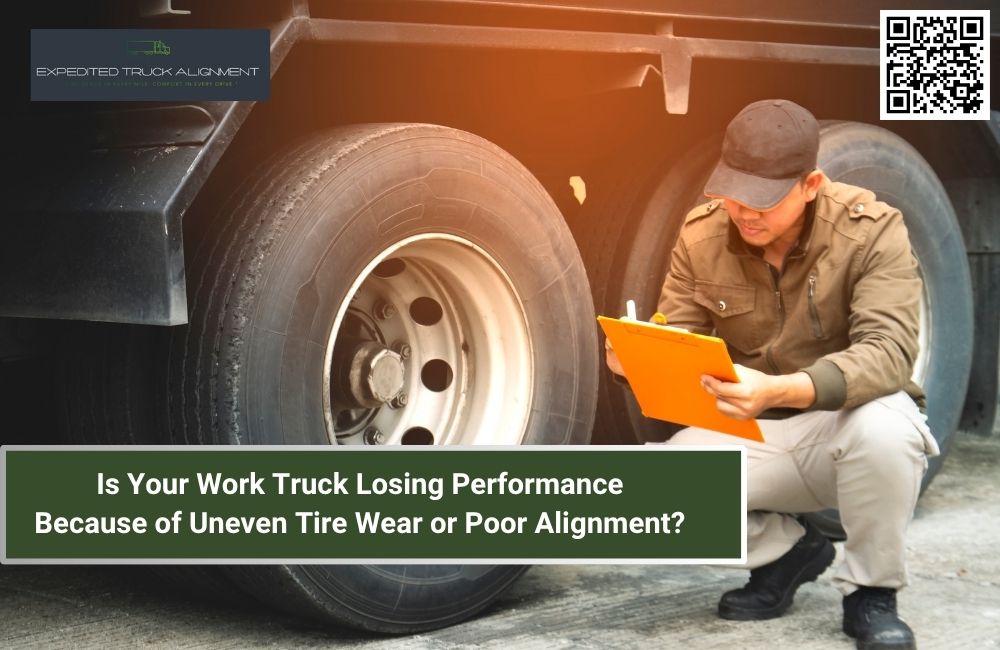
Is Your Work Truck Losing Performance Because of Uneven Tire Wear or Poor Alignment?
A work truck does not have to break down completely to start underperforming. In many cases, the first signs are subtle. The steering may feel a little off. The ride may seem rougher than usual. The truck may not feel as steady on the road, especially when carrying weight. Just as importantly, your truck tires may begin wearing down faster than expected.
For many drivers, these problems are not random. They are often connected to uneven tread wear, poor truck alignment, or deeper steering and suspension issues that affect how the vehicle handles every day. When those problems are ignored, the result can be lower road confidence, reduced efficiency, and earlier truck tire replacement than you planned for.
If your truck no longer feels as smooth, responsive, or dependable as it once did, it may be time to take a closer look at what your tires and alignment are trying to tell you.
Why Performance Problems Often Start at Road Level
Your truck’s performance depends on how well it connects with the road. That connection happens through the tires, steering system, suspension, and wheel angles working together. If one part of that system starts slipping out of place, the truck can begin losing performance little by little.
Your tires reveal how the truck is really driving
Your truck tires do more than carry weight. They show how the truck is tracking, how the load is being distributed, and whether the wheels are meeting the road evenly. If the tread is wearing strangely, the truck is often already losing performance in ways the driver can feel.
Alignment affects more than straight driving
A lot of drivers think truck alignment only matters if the vehicle pulls left or right. In reality, it also affects how the truck responds in traffic, how stable it feels under load, and how efficiently the tires roll over time.
Small issues can quietly become expensive
Poor handling and uneven wear may seem minor at first, but they often lead to bigger costs later. That includes premature truck tire replacement, lower fuel efficiency, and more wear on parts connected to steering and suspension.
How Uneven Tire Wear Can Hurt Overall Truck Performance
When tires wear unevenly, the truck no longer performs the way it should. Even if the problem starts small, it can gradually affect ride quality, stability, and control.
Uneven wear reduces traction
Tires need even tread contact to grip the road correctly. If one edge is wearing faster than the other, the truck can feel less planted during braking, turning, and wet-road driving. Worn truck tires often change the way the vehicle responds long before they become completely worn out.
Uneven wear creates a rougher ride
A tire that is wearing in strange patterns may start causing vibration, road noise, or a rougher feel behind the wheel. That change in comfort is often one of the first hints that the truck is losing performance.
Uneven wear shortens tire life
If the tread is not wearing evenly, the tire may need to be replaced earlier than expected. That makes truck tire replacement more frequent and more expensive than it should be.
How Poor Alignment Affects Daily Driving
When truck alignment is off, the truck may still run, but it often will not run as well as it should. The changes can be gradual, but they become more noticeable the longer the issue goes uncorrected.
The truck may pull or drift
A truck that drifts left or right forces the driver to keep correcting the wheel. That does not just make driving more tiring. It also reduces the smooth, stable feel a work truck should have on the road.
The steering wheel may sit off-center
If the steering wheel is crooked while driving straight, the vehicle may need truck wheel alignment. This is one of the easiest signs to notice and one of the clearest indicators that the truck is not tracking correctly.
The truck may feel less predictable
When alignment is off, the truck can feel vague, loose, or slightly unsettled, especially at higher speeds or during lane changes. That reduced confidence is often a direct sign of lost performance.
Signs Your Work Truck May Be Losing Performance
Not every truck problem starts with a warning light. Often, performance issues show up in the way the vehicle feels and how the tires are wearing.
You are replacing tires sooner than expected
If truck tire replacement keeps happening earlier than you think it should, the tires may not be the only problem. Repeated early wear often points to poor truck alignment or a related suspension issue.
The ride feels rougher than before
If the truck seems harsher over bumps or more unstable than usual, worn parts or poor alignment may be affecting the way it carries weight and responds to the road.
The truck feels worse under load
A lightly loaded truck may hide an issue that becomes much more noticeable when carrying tools, equipment, or cargo. In those cases, heavy truck alignment may be necessary to restore better handling and protect tire life.
Tread wear looks strange or uneven
Edge wear, feathering, or one tire aging faster than the others all suggest that your truck tires may be wearing in ways that hurt performance and reduce their lifespan.
Why Work Trucks Are More Vulnerable to These Problems
A daily work truck deals with more mileage, more weight, and more pressure than a standard passenger vehicle. That means small issues can become noticeable much faster.
Daily use speeds up wear
The more often the truck is on the road, the more chances there are for poor truck alignment to wear down the tires and affect road feel.
Heavy loads magnify small problems
Loaded work trucks place more stress on the steering, suspension, and tires. If something is already slightly off, heavier use can make the loss of performance easier to feel and more expensive to ignore.
Downtime has a bigger impact
A performance issue in a work truck affects more than the vehicle itself. It can affect schedules, deliveries, jobsite timing, and your daily workflow.
When Uneven Wear Points to Something Bigger
Sometimes uneven wear is not just about alignment. It can also be a clue that suspension or steering parts are worn and changing the way the truck carries itself on the road.
Worn suspension parts can affect alignment
A truck may receive truck wheel alignment, but if suspension components are loose or worn, the settings may not hold. That means the same problems can return even after service.
Steering components can change road feel
If the truck feels loose or vague, worn steering parts may be working alongside poor alignment to reduce performance.
The tire wear pattern can help tell the story
One of the best reasons to inspect truck tires closely is that their wear often reveals whether the issue is simple or part of a larger problem.
Why Heavier Trucks Need More Specialized Attention
The larger the vehicle, the more critical correct alignment becomes. Bigger trucks do not hide small problems for long.
Heavier trucks wear tires faster when alignment is off
A larger vehicle puts more pressure on the tread. That means minor errors in wheel position can lead to noticeable wear much faster. This is why heavy truck alignment is so important for commercial trucks and loaded work vehicles.
Bigger vehicles need greater precision
Heavier setups often require more careful service than smaller vehicles. Many operators specifically search for heavy truck alignment near me because they know larger vehicles need experienced attention.
Commercial use raises the stakes
If a truck is working daily under load, poor alignment can affect handling, tire costs, and productivity all at once. That is why so many businesses look for heavy duty alignment near me instead of waiting for the problem to get worse.
It Is Not Only Work Trucks That Can Be Affected
While work trucks are the most obvious example, larger vehicles of other kinds can show the same warning signs.
Travel vehicles can lose performance too
A bigger vehicle used for travel can also suffer from drifting, rough handling, and uneven tread wear. In those cases, RV alignment can help improve control, comfort, and tire life.
Bigger vehicles need balanced handling
Whether the vehicle is for work or travel, proper alignment and healthy tires help it stay more stable and more predictable on the road.
What Smart Truck Owners Check First
If you suspect your truck is losing performance, a few simple observations can reveal a lot.
Check the tread carefully
Look at your truck tires for one-sided wear, patchy wear, or one tire wearing much faster than the rest.
Pay attention to steering feel
If the truck pulls, drifts, or keeps the steering wheel off-center, it may be time to search for truck alignment near me and schedule an inspection.
Notice changes under real working conditions
A truck that feels worse when loaded often points to a more serious need for heavy truck alignment or a suspension check.
Do not ignore repeat problems
If you keep dealing with handling complaints or early truck tire replacement, the truck likely needs a closer look at the full alignment and suspension picture.
How Early Service Helps Protect Performance
The sooner you address these issues, the easier it usually is to restore the way the truck should feel and perform.
Better alignment improves control
Correct truck alignment helps the truck track straighter, feel more stable, and respond more predictably during daily driving.
Better tire wear improves efficiency
Healthy truck tires rolling evenly help reduce unnecessary drag and stress, which supports smoother performance over time.
Early action lowers long-term cost
Addressing problems before they ruin the tread can help reduce premature truck tire replacement and prevent wear from spreading to other systems.
Conclusion
Yes, your work truck can absolutely lose performance because of uneven tire wear or poor truck alignment. When the truck starts drifting, riding rough, wearing tires unevenly, or feeling less steady on the road, it is often a sign that the connection between the vehicle and the road is no longer working the way it should.
The good news is that these problems usually give warning signs before they become major repairs. Paying attention to your truck tire shop, steering feel, and overall handling can help you spot the issue early. Whether your truck needs truck wheel alignment, heavy truck alignment, or even RV alignment for a larger vehicle, taking action early can help restore better performance, improve safety, and reduce unnecessary repair costs.
Contact Expedited Truck Alignment & Tires
Expedited Truck Alignment & Tires
Address: 11302 Steele St S, Lakewood, WA 98499
Phone: +1 (619) 551-8460
