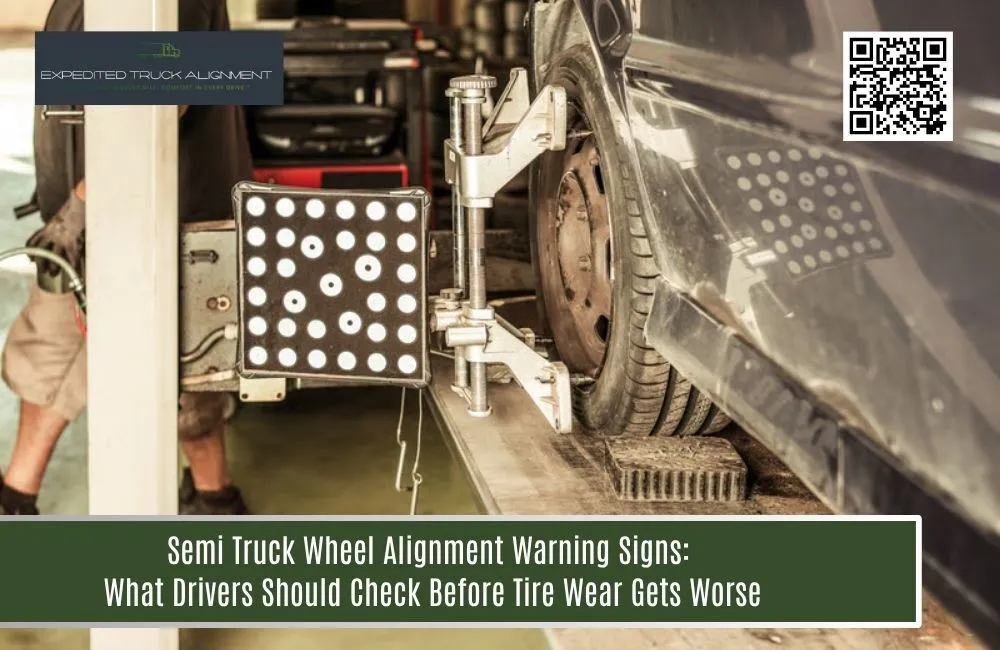
Semi Truck Wheel Alignment Warning Signs: What Drivers Should Check Before Tire Wear Gets Worse
Semi Truck Wheel Alignment Warning Signs: What Drivers Should Check Before Tire Wear Gets Worse
Alignment problems rarely begin with a dramatic failure. More often, a driver notices a small change: the steering wheel no longer sits where it used to, the truck needs slightly more correction on a straight road, or one tire starts losing tread faster than expected. Recognizing these changes early can help drivers protect tire life and address developing problems before they become more expensive. A professional semi truck wheel alignment inspection can determine whether wheel angles, axle position, or related mechanical conditions are contributing to the symptoms.
For drivers operating around Lakewood, Tacoma, and South Puget Sound, early detection is particularly valuable. Commercial trucks regularly encounter highway mileage, industrial areas, loading facilities, uneven pavement, tight turns, and road impacts. Knowing what to watch for gives drivers useful information to share with a technician when something changes.
The First Clue May Be How Often You Correct the Steering
Drivers become familiar with the normal steering behavior of their trucks. That familiarity makes subtle changes important.
If a truck that previously tracked comfortably begins requiring frequent steering corrections on relatively straight pavement, its alignment deserves attention. The vehicle may feel as though it wants to drift away from the intended path.
Road crown and crosswinds can also influence tracking, so one brief episode does not confirm an alignment problem. The concern becomes more meaningful when the behavior occurs repeatedly on different roads and under similar operating conditions.
A technician can then determine whether alignment measurements, tires, steering, or suspension components explain the change.
An Off-Center Steering Wheel Deserves Attention
A steering wheel that no longer returns to its familiar centered position while the truck travels straight can provide another useful warning.
This can happen after an alignment setting changes, an impact affects steering geometry, or a component develops wear. It can also appear following steering or suspension work if the complete vehicle geometry was not verified afterward.
Drivers should notice whether the change appeared suddenly or gradually.
That timing provides valuable diagnostic context. A sudden change following a curb strike, for example, tells a different story from a steering wheel that has moved progressively off center over several months.
Read the Tread Before It Becomes Severely Worn
Tires preserve evidence of how they have been interacting with the road.
Instead of waiting until a tire is obviously worn out, drivers can periodically compare tread across its width. A noticeable difference between the inner edge, center, and outer edge may indicate that something needs investigation.
Feathered tread is another useful clue. When tread blocks develop a smoother edge in one direction and a sharper edge in the other, the tire may be experiencing directional scrub.
A truck tire shop can evaluate these patterns alongside inflation, wheel condition, suspension condition, and alignment measurements rather than assuming every irregular pattern has the same cause.
Tire Wear and Alignment Are Connected, but Not Identical
Uneven tread does not automatically mean the alignment is incorrect.
Low or inconsistent inflation can change the contact patch. Wheel imbalance may contribute to irregular wear. Worn shocks can affect how the tire remains controlled against the road, while loose steering or suspension components can allow wheel position to change during operation.
This is why tire wear should be considered diagnostic evidence rather than a final diagnosis.
Good truck alignment work begins by understanding the condition of the vehicle, not simply making an adjustment because a tire looks unusual.
Pay Attention to Changes After Road Impacts
Commercial trucks are designed for demanding work, but potholes, curbs, road debris, and rough loading areas can still place substantial force on tires, wheels, steering parts, and suspension components.
After a significant impact, drivers should pay closer attention to how the truck behaves.
A new steering-wheel position, unexpected drift, vibration, or rapid change in tread condition can justify an inspection even if the truck remains operational.
The sooner a change is identified, the greater the opportunity to address it before a significant amount of tire tread is lost.
Alignment Problems May Originate Beyond the Steer Axle
Drivers often associate alignment exclusively with the front wheels. On a commercial vehicle, however, axle relationships farther back can influence how the truck travels.
If a drive axle does not track correctly, it can create a thrust direction that requires the driver to compensate at the steering wheel. The symptom may feel like a front-end problem even when the steer axle is not the primary cause.
This is particularly important on multi-axle vehicles.
A complete semi truck alignment service may need to evaluate how the axles relate to one another instead of focusing only on steering-wheel position.
Compare Tire Wear Across Axle Positions
One worn tire tells part of the story. Comparing several positions provides context.
If both steer tires show similar directional wear, the diagnostic path may differ from a situation where only the left steer tire is affected. Likewise, unusual wear across one drive axle may suggest a different concern than wear appearing throughout the vehicle.
Drivers do not need to determine the mechanical cause themselves.
Simply noticing where the wear appears and whether matching positions look different can provide technicians with useful information.
Loading Can Make a Small Problem More Noticeable
A truck may behave normally when lightly loaded and show alignment-related symptoms only after additional weight is added.
Load changes suspension position and increases forces acting on steering, tires, and axles. If a bushing, joint, spring, or air suspension component has developed wear, additional weight may make the movement easier to detect.
Drivers should tell the technician when the symptom occurs.
Knowing that a truck pulls only when loaded, for example, is more useful than simply reporting that it “sometimes pulls.”
New Vibration Should Not Automatically Be Called an Alignment Issue
Vibration and alignment problems can occur together, but vibration often requires a wider diagnostic approach.
Tire irregularity, wheel balance, wheel condition, suspension wear, and other mechanical factors can produce shaking or vibration at certain speeds.
The location and timing matter.
A vibration felt primarily through the steering wheel may lead the inspection in a different direction from one felt through the seat or chassis.
If vibration appears alongside new tread wear or steering changes, the combination of symptoms should be investigated rather than treated independently.
Alignment Checks Matter After Steering or Suspension Repairs
Replacing a worn component corrects the failed part, but some repairs can also affect wheel or axle geometry.
Work involving kingpins, bushings, steering joints, springs, or other position-related components may justify an alignment check after the repair.
This provides a new mechanical baseline.
Without that verification, a repaired truck could return to service with geometry that still contributes to irregular tread wear.
A semi truck wheel alignment check after relevant repairs can help confirm that the repaired system and wheel position are working together correctly.
Tire Noise Can Provide an Overlooked Warning
Drivers often notice tire noise before they visually inspect the tread.
A tire developing irregular wear may become louder as the tread surface changes. The sound may vary with road speed or pavement type.
Noise alone cannot identify an alignment problem, but a new tire sound combined with feathering, steering changes, or abnormal wear deserves investigation.
Drivers who spend hours behind the wheel are often in the best position to notice these subtle changes.
Why Early Diagnosis Can Protect Tire Investment
Waiting until tread damage becomes severe limits the available options.
If abnormal wear is discovered early, the underlying mechanical condition may be corrected while the tire still has substantial usable tread. Once the wear becomes advanced, correcting the alignment cannot restore rubber that has already been lost.
That distinction matters for owner-operators and fleets trying to control tire costs.
The objective is not simply to schedule more alignment services. It is to identify the right moment for inspection before abnormal wear consumes a meaningful portion of tire life.
South Puget Sound Driving Creates Different Alignment Demands
A regional truck may travel from Lakewood through Tacoma, Fife, Federal Way, Kent, Puyallup, or Olympia during a normal work cycle.
That can mean interstate travel followed by industrial access roads, loading yards, tight urban turns, and uneven local pavement.
These changing conditions place different forces on tires and suspension components.
For local operators, monitoring vehicle behavior between scheduled maintenance visits can help identify changes associated with demanding daily use.
What Information Should You Give the Alignment Technician?
A useful diagnosis begins with a clear description of what changed.
Tell the technician whether the truck pulls when empty, loaded, accelerating, braking, or travelling at highway speed. Mention recent pothole or curb impacts, steering or suspension repairs, tire replacements, and whether the symptom began suddenly.
Also explain which tire positions appear to be wearing differently.
This information helps a technician reproduce the concern and decide whether alignment measurements alone are sufficient or whether steering, suspension, wheels, and tires should be investigated first.
Frequently Asked Questions
Can a semi truck need alignment even if it does not pull?
Yes. Some alignment conditions create tire scrub or irregular wear before the driver notices a significant directional change.
Why did my steering wheel suddenly become off center?
A road impact, geometry change, component movement, or recent repair can alter steering-wheel position. An inspection is needed to determine the cause.
Will an alignment fix tires that are already unevenly worn?
Alignment can correct an underlying geometry problem, but it cannot restore tread that has already worn away.
Why does my truck track differently when carrying a heavy load?
Additional weight changes suspension position and mechanical forces. Existing component wear or axle-position issues may become more noticeable under load.
Should alignment be checked after replacing steering components?
Depending on the components repaired, an alignment check may be appropriate to verify wheel and axle geometry afterward.
Is every steering pull caused by bad alignment?
No. Tire pressure, tire condition, brake concerns, steering wear, suspension problems, loading, road crown, and other factors can produce similar symptoms.
Catch the Change Before the Tire Pays for It
Drivers do not need specialized alignment equipment to recognize that a truck has started behaving differently. Steering corrections, an off-center wheel, unusual tread patterns, new tire noise, and changes after an impact can all provide useful early warnings.
The next step is accurate diagnosis. For drivers around Lakewood and Tacoma who need professional evaluation, Expedited Truck Alignment & Tires provides alignment, tire, steering, and suspension services for commercial vehicles throughout South Puget Sound.
Expedited Truck Alignment & Tires
Address: 11302 Steele St S, Lakewood, WA 98499
Phone: +1 (564) 200-3637
