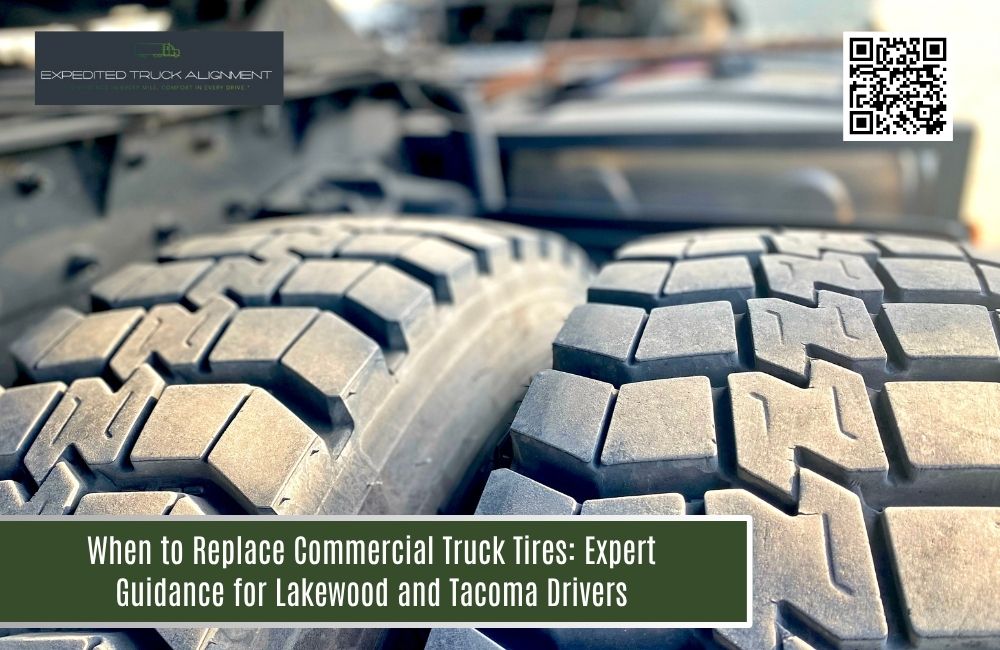
When to Replace Commercial Truck Tires: Expert Guidance for Lakewood and Tacoma Drivers
Knowing when to replace commercial truck tires can prevent roadside breakdowns, protect cargo, and reduce avoidable operating costs. For drivers and fleet managers in Lakewood, Tacoma, and surrounding Washington communities, tire replacement should be based on tread condition, damage, wear patterns, and vehicle performance, not guesswork alone.
Expedited Truck Alignment & Tires helps owner-operators and local fleets evaluate tire condition, diagnose uneven wear, and determine whether a tire can be repaired or should be replaced. With more than a decade of hands-on experience in alignment, suspension, and tire wear diagnostics, founder Luis Lopez brings a practical, safety-focused approach to every inspection.
When Should Commercial Truck Tires Be Replaced?
Commercial tires should be replaced when their condition no longer supports safe, reliable operation. The most common reasons include insufficient tread depth, structural damage, repeated air loss, severe irregular wear, or signs that the casing has been compromised.
A tire inspection is especially important when you notice:
Exposed cords or belt material
Sidewall bulges, cuts, or deep cracking
Frequent pressure loss
Uneven tread across the same axle
Severe shoulder or center wear
Vibration that continues after balancing
Damage that cannot be safely repaired
Reduced traction or handling stability
Do Not Rely on Mileage Alone
Mileage can provide a general maintenance reference, but it should not be the only factor used to make a replacement decision. Tire life varies based on axle position, load weight, inflation, route conditions, braking habits, alignment, and suspension condition.
Two vehicles using similar truck tires may experience very different service lives if one operates under heavier loads or travels on rougher roads.
Tread Wear Is One of the Clearest Warning Signs
Tread condition affects traction, braking, water displacement, and overall control. As tread wears down, the tire may become less reliable in wet conditions and more vulnerable to heat-related damage.
Drivers should inspect tread depth across multiple points, not only in the center.
Uneven Wear May Point to a Bigger Problem
Irregular tread wear often indicates an issue beyond the tire itself. Common patterns include:
Inner-edge wear
Outer shoulder wear
Feathering
Cupping
Diagonal wear
Flat spotting
Different wear rates on dual tires
These patterns may be caused by improper inflation, wheel imbalance, worn steering parts, suspension movement, or incorrect truck alignment.
Replacing the tire without correcting the source of the wear can cause the same problem to return.
Sidewall Damage Requires Immediate Attention
The sidewall carries load and flexes continuously while the vehicle is moving. Cuts, bulges, exposed material, or impact damage may weaken the tire structure even when the tread still appears usable.
A bulge can indicate internal separation, while deep cuts may expose structural layers to moisture and further deterioration.
Can Sidewall Damage Be Repaired?
Many sidewall injuries are not suitable for repair because the area flexes heavily under load. A qualified technician should inspect the damage and determine whether replacement is necessary.
Drivers should avoid continuing long routes with visible sidewall damage, especially under heavy loads.
Repeated Air Loss Is a Replacement Warning
Slow pressure loss may come from a puncture, leaking valve, damaged wheel, bead issue, or casing problem. While some punctures can be repaired, repeated leaks may indicate that the tire is no longer dependable.
Operating with low pressure can increase heat, damage the casing, and create excessive shoulder wear.
A professional truck tire shop can inspect the tire, valve, wheel, and bead area to identify the source before recommending repair or replacement.
Heat, Age, and Operating Conditions Matter
Commercial vehicles generate significant heat, especially during long-distance driving, heavy hauling, and warm-weather operation. Excessive heat can weaken rubber compounds and accelerate internal damage.
Washington drivers may also face changing conditions, from wet roads in Tacoma and Lakewood to longer regional routes with varied pavement quality.
Signs of Tire Aging
Aging tires may show:
Dry cracking
Brittle rubber
Hardening around the tread or sidewall
Visible weathering
Reduced flexibility
Frequent small leaks
Even when tread remains, aging can affect structural reliability. Tires with uncertain service history should be inspected before being placed into demanding commercial use.
Axle Position Affects Replacement Decisions
Steer, drive, and trailer positions place different demands on tires. A tire suitable for one axle may not provide the same performance on another.
When selecting semi truck tires, drivers should consider:
Axle position
Load rating
Tread design
Route type
Regional or long-haul use
Wet-weather traction
Expected mileage
Retread suitability
Proper tire selection can improve wear consistency and help control long-term operating costs.
Why Alignment Should Be Checked Before New Tires
Installing new tires on a misaligned truck can lead to premature wear within a relatively short period. A vehicle that pulls, drifts, or shows repeated wear on the same position should be inspected before replacement.
Expedited Truck Alignment & Tires provides total truck and trailer alignment, including three-axle and multi-axle configurations.
Suspension Problems Can Damage New Tires
Worn kingpins, bushings, air bags, shocks, springs, hangers, and steering joints can affect wheel movement and tire contact.
If these components are not repaired, the vehicle may not hold proper alignment. This is why a full inspection may be more valuable than replacing the damaged tire alone.
Repair or Replace: How Technicians Decide
A professional inspection considers the size, location, depth, and type of damage. It also evaluates the tire’s age, remaining tread, previous repairs, and overall casing condition.
Repair may be possible when:
The puncture is located in an approved tread area
The damage is limited in size
The casing remains structurally sound
The tire has not been driven extensively while underinflated
No sidewall or belt separation is present
Replacement is generally the safer choice when damage affects the sidewall, cords, bead, or internal structure.
How Fleet Managers Can Reduce Tire Replacement Costs
A preventive tire program can help fleets identify problems before they lead to emergency replacement or roadside failure.
Useful practices include:
Checking tire pressure regularly
Recording tread depth
Inspecting sidewalls and valve components
Rotating tires when appropriate
Balancing wheels
Monitoring recurring wear patterns
Scheduling alignment inspections
Repairing suspension and steering issues promptly
Track Wear by Vehicle and Axle
Fleet managers can learn a great deal by tracking which tires wear fastest and where the wear occurs. Repeated problems on the same axle may indicate a mechanical issue rather than normal use.
This information helps maintenance teams plan repairs, compare tire performance, and reduce unnecessary replacement.
Local Tire Service for Lakewood and Tacoma Drivers
Expedited Truck Alignment & Tires serves commercial drivers, owner-operators, fleet managers, and RV owners throughout Lakewood, Tacoma, and the South Puget Sound region.
Services include:
Commercial tire sales and installation
Tire replacement
Tire repair
Rotation and balancing
Inflation correction
Tire wear analysis
Roadside tire assistance
Fleet tire inspections
Suspension and steering service
Multi-axle alignment
The company is also an authorized HIXIH Tire Distributor in Washington.
Why Local Experience Matters
Luis Lopez founded Expedited Truck Alignment & Tires after developing his technical foundation at Angel’s HD Suspension and Alignment under the guidance of his father, Angel Lopez.
That background supports a service process built around accurate measurements, visual evidence, and clear explanations. Customers receive practical recommendations based on how the vehicle is actually wearing and performing.
The goal is not simply to sell a replacement tire. It is to help prevent the same issue from returning.
Frequently Asked Questions
How do I know if my truck tires need replacement?
Replace a tire when it has unsafe tread depth, exposed cords, structural damage, sidewall bulges, repeated leaks, or severe uneven wear that cannot be corrected.
Can uneven tire wear be fixed without replacement?
Minor wear may sometimes be managed if the tire remains safe and the underlying cause is corrected. Severe or structural wear usually requires replacement.
Should I replace both tires in a dual assembly?
Dual tires should be closely matched in size and wear. A technician can determine whether one or both need replacement based on tread depth, diameter, and condition.
Can an alignment extend tire life?
Yes. Correct axle and wheel positioning can reduce irregular wear and help tires maintain more consistent road contact.
Does the shop inspect commercial fleets?
Yes. Expedited Truck Alignment & Tires provides tire, alignment, suspension, steering, and preventive inspection services for independent drivers and local fleets.
Schedule a Commercial Tire Inspection
Do not wait for a roadside failure to confirm that a tire is unsafe. A professional inspection can identify tread concerns, structural damage, inflation issues, and mechanical causes of premature wear.
Schedule service with Expedited Truck Alignment & Tires for dependable tire diagnostics, replacement guidance, and heavy-duty maintenance near Lakewood and Tacoma, WA.
Expedited Truck Alignment & Tires
Address: 11302 Steele St S, Lakewood, WA 98499
Phone: +1 (564) 200-3637
