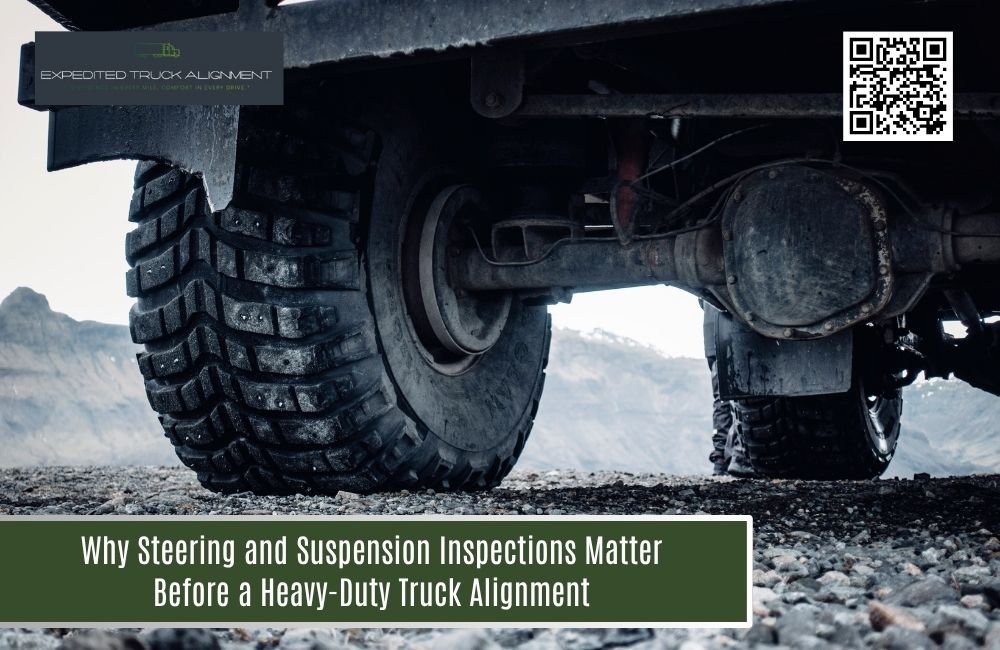
Why Steering and Suspension Inspections Matter Before a Heavy-Duty Truck Alignment
A professional truck alignment delivers the best results when the steering and suspension systems are in good condition. If critical components are worn or damaged, alignment measurements may not hold, leading to continued handling issues, uneven tire wear, and unnecessary maintenance costs. For commercial drivers in Lakewood, Tacoma, and throughout Washington, a complete inspection before alignment is one of the smartest ways to protect both safety and vehicle performance.
At Expedited Truck Alignment & Tires, every heavy-duty alignment begins with a careful evaluation of the steering and suspension system. With more than a decade of hands-on experience, founder Luis Lopez and his team focus on identifying the root cause of handling and tire wear concerns rather than simply adjusting alignment angles.
Why Steering and Suspension Affect Alignment
A truck’s alignment depends on stable steering and suspension components. These parts keep the wheels positioned correctly while the vehicle carries heavy loads, travels long distances, and handles changing road conditions.
When components become loose or worn, wheel angles can shift during normal driving. Even if an alignment is performed, those angles may change again once the truck returns to the road.
Components That Influence Alignment
Several parts directly affect wheel positioning and steering stability, including:
Kingpins
Bushings
Steering joints
Tie rod components
Air bags
Air suspension systems
Shocks
Springs
Spring hangers
Steering linkage
Inspecting these components before alignment helps ensure the adjustments can be maintained over time.
Common Signs of Steering or Suspension Problems
Many steering and suspension issues develop gradually, making them easy to overlook during everyday operation.
Drivers may notice:
Steering wheel vibration
Pulling to one side
Uneven or rapid tire wear
Loose steering feel
Excessive bouncing
Vehicle leaning during turns
Poor ride quality
Difficulty maintaining a straight path
These symptoms often indicate that additional repairs may be needed before an alignment can deliver lasting results.
Uneven Tire Wear Can Be a Warning
Irregular wear is frequently one of the first signs of steering or suspension problems. A trusted truck tire shop can examine tread patterns and determine whether the wear is caused by alignment, worn suspension parts, improper inflation, or wheel balance issues.
Addressing the source of the wear helps prevent repeated tire replacement and improves long-term operating costs.
Why Alignment Alone May Not Solve the Problem
Some drivers assume that an alignment will correct every steering issue. In reality, alignment adjusts wheel angles, but it cannot compensate for worn mechanical components.
For example:
A damaged kingpin may allow wheel movement.
Worn bushings can change suspension geometry.
Loose steering joints reduce steering precision.
Weak air suspension components affect ride height.
If these conditions are not corrected first, alignment measurements may change again soon after service.
Stable Components Deliver Better Results
When steering and suspension parts are in proper condition, technicians can perform more accurate adjustments. The vehicle is then more likely to maintain those settings during daily operation.
This contributes to improved handling, predictable steering response, and more consistent tire wear.
Protecting Commercial Tires From Premature Wear
Replacing commercial truck tires is a significant operating expense for fleets and owner-operators. Premature tire wear often results from mechanical issues that could have been identified during a suspension inspection.
Problems such as worn kingpins or damaged bushings can place uneven pressure on the tread, reducing tire life even after new tires are installed.
New Tires Deserve a Complete Inspection
Before installing new semi truck tires, technicians should evaluate:
Steering components
Suspension condition
Ride height
Alignment angles
Tire pressure
Wheel balance
Existing tread wear patterns
Taking these steps helps protect the investment in new tires and reduces the likelihood of recurring wear.
Steering Inspections Improve Driver Confidence
Commercial drivers rely on consistent steering response throughout every trip. Excessive play, vibration, or instability can increase driver fatigue and make the vehicle more difficult to control, especially under heavy loads.
A steering inspection helps identify worn or damaged components before they affect vehicle safety or reliability.
Better Handling Supports Safer Operation
A properly maintained steering system can contribute to:
More predictable handling
Improved directional stability
Reduced steering corrections
Better control during braking
Smoother highway driving
Greater driver confidence
These benefits are particularly valuable for vehicles operating on Washington highways and regional freight routes.
Suspension Inspections Help Reduce Downtime
Preventive inspections allow technicians to identify developing issues before they result in unexpected failures.
During a suspension inspection, the team checks for:
Worn bushings
Loose kingpins
Air bag damage
Broken springs
Shock absorber wear
Hanger movement
Steering linkage concerns
Ride height irregularities
Finding these problems early helps fleet managers schedule repairs during planned maintenance rather than responding to roadside breakdowns.
Preventive Maintenance Saves Time
Unexpected repairs can interrupt deliveries, increase labor costs, and reduce fleet availability.
Routine suspension inspections help businesses:
Reduce emergency repairs
Improve maintenance planning
Extend tire life
Protect alignment settings
Increase vehicle reliability
Support long-term operating efficiency
Complete Heavy-Duty Services Under One Roof
Expedited Truck Alignment & Tires provides more than alignment alone. Customers receive comprehensive heavy-duty maintenance designed to improve vehicle performance and reduce unnecessary expenses.
Services include:
Total truck and trailer alignment
Three-axle and multi-axle alignment
Alignment diagnostics
Tire wear analysis
Tire installation and replacement
Tire repair
Rotation and balancing
Suspension repair
Steering system diagnostics
Air suspension repair
Fleet tire services
This complete approach allows technicians to identify related issues during one visit instead of treating each problem separately.
Local Experience Serving Washington Drivers
Located in Lakewood, Expedited Truck Alignment & Tires serves commercial drivers across Tacoma, University Place, Spanaway, Puyallup, Fife, Federal Way, Auburn, Kent, Olympia, Lacey, Gig Harbor, and surrounding Washington communities.
The company also supports local fleets with preventive inspections, tire services, and heavy-duty maintenance tailored to commercial vehicles operating throughout the South Puget Sound region.
Experience Built on Honest Service
Founder Luis Lopez developed his technical expertise through years of hands-on work at Angel's HD Suspension and Alignment under the guidance of his father, Angel Lopez.
That experience continues to shape the company's commitment to transparent communication, detailed inspections, and practical maintenance recommendations.
Customers receive clear explanations about what technicians find, why repairs are recommended, and how each service contributes to long-term vehicle reliability.
Frequently Asked Questions
Why should suspension be inspected before alignment?
Worn suspension parts can change wheel positioning after alignment is completed. Repairing these components first helps ensure the alignment remains accurate.
Can steering problems cause uneven tire wear?
Yes. Loose or worn steering components may allow unwanted wheel movement, creating irregular tread wear and reducing tire life.
Should I replace tires before checking alignment?
It is often recommended to inspect steering, suspension, and alignment before installing new truck tires. Correcting the underlying issue helps protect the replacement tires.
What suspension components are commonly inspected?
Technicians typically inspect kingpins, bushings, steering joints, air bags, shocks, springs, hangers, steering linkage, and related suspension components.
Does Expedited Truck Alignment & Tires service commercial fleets?
Yes. The company provides alignment, tire services, steering diagnostics, suspension repair, and preventive maintenance for owner-operators and commercial fleets throughout the Lakewood and Tacoma area.
Schedule a Steering and Suspension Inspection
A heavy-duty alignment is most effective when the steering and suspension systems are working properly. Scheduling a complete inspection before alignment can improve tire life, handling, and long-term vehicle performance.
Contact Expedited Truck Alignment & Tires to schedule experienced steering, suspension, and alignment service for your commercial truck or fleet in Lakewood, Tacoma, and surrounding Washington communities.
Expedited Truck Alignment & Tires
Address: 11302 Steele St S, Lakewood, WA 98499
Phone: +1 (564) 200-3637
